
Planning & building
Before you sign with a builder
A good first conversation should make the written agreement easier to understand. Bring the points below to your builder and resolve unclear answers before signing.
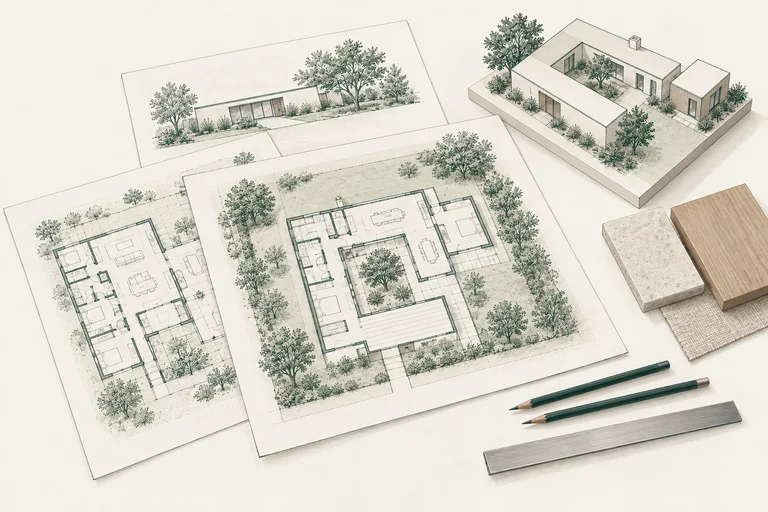
Which documents describe the work?
Identify the drawing versions, specifications and scope included in the proposal. Ask what happens if the documents describe an item differently. Make exclusions visible, including owner purchases and work by other teams. Compare this list with your priorities for the home.
For anything that remains a choice, ask how it is priced today and how the final selection will be reconciled. A number without an inclusion boundary is difficult to compare.
Who is responsible for the next decision?
Ask who handles day-to-day questions, design clarifications, permit coordination, selections and scheduling. When your architect or designer is already appointed, clarify the handoffs. Specialist subcontractors are a normal part of construction; understand how the relevant work will be coordinated.
Check the contractor’s licence through CSLB and request the relevant insurance documentation. Names and details should match the party you are contracting with. Ask questions about any mismatch before proceeding.
What must be recorded in writing?
CSLB states that California home improvement projects over $500 require a written contract. Its guidance calls for detailed scope, payment arrangements and permit responsibilities. Changes to price or scope must use a written change order signed before the change. These are home-improvement rules; ask which contract requirements apply to your particular project.
Do not treat “avoiding changes” as a promise that an existing building contains no surprises. Ask how new information, an owner request or a revised selection will be described, priced and approved, including any schedule effect.
How do payments relate to the work?
Read the proposed payment schedule beside the scope. Ask what each stage covers and how completion is identified. CSLB’s home-improvement guidance limits the down payment to $1,000 or 10 percent of the contract price, whichever is less; do not apply a website summary indiscriminately to a different contract type.
What happens at completion?
Discuss the final walkthrough, outstanding items, operating information and the documents you expect to receive. Identify who records follow-up items and how you contact the team afterwards. Get offered workmanship and manufacturer warranty terms in writing; do not assume a universal warranty length.
Bring these questions to Sami & Sons along with your plans. The specific commitments belong in your actual agreement, where both sides can refer to them.
Official resources
Use current guidance for your property and proposal.
What are you planning?
Bring your plans and the questions still open. Estimates are complimentary.
Talk through your plans